
The 2024 Blog Digest – Q3/Q4 brings you all of The Safety Artisan’s blog posts from the first six months of this year. I hope that you find this a useful resource!
The 2024 Blog Digest – Q3/Q4: 18 Posts!
- System Safety Foundations Course
 FacebookTweetPin The System Safety Foundations Course teaches the fundamentals of system safety — and how to apply them. A practical introduction to system safety engineering, hazard identification and safety analysis for engineers, safety practitioners and technical managers. System safety can seem complicated. Standards, hazard analyses, risk assessments, safety requirements and assurance activities can quickly become… Read more: System Safety Foundations Course
 - Risk Assessment Resources: Guides, Tools and Training
 FacebookTweetPin Welcome to Module Five, Risk Assessment Resources: Guides, Tools and Training. We’re on the home straight now! This is the last of the five modules. I will let you know where to get more resources and help on these topics. Course Learning Objectives More Resources for Risk Assessment: Transcript Copyright/Source Statement “First, I want… Read more: Risk Assessment Resources: Guides, Tools and Training
 - Computer Reliability: Legal Presumptions and Safety
 FacebookTweetPin Computer Reliability: Legal Presumptions and Safety must align if we are to have justice! Background The ‘Horizon’ Scandal in the UK was a major miscarriage of justice: Between 1999 and 2015, over 900 sub postmasters were convicted of theft, fraud and false accounting based on faulty Horizon data, with about 700 of these prosecutions… Read more: Computer Reliability: Legal Presumptions and Safety
 - Risk Assessment Standards: How to Choose and Use Them
 FacebookTweetPin Risk Assessment Standards: How to Choose and Use Them. The standard is the thing that we’re going to use to achieve things – the tool. And that’s important because tools designed to do certain things usually perform well. But they don’t always perform well on other things. So we will ask, ‘Are we doing… Read more: Risk Assessment Standards: How to Choose and Use Them
 - Risk Management: Principles, Process and Techniques
 FacebookTweetPin Welcome to Risk Management: Principles, Process and Techniques, where we’re going to go through these basic concepts of risk management. We’re going to break it down into the constituent parts and then we’re going to build it up again and show you how it’s done. I’ve been involved in risk management, in project risk… Read more: Risk Management: Principles, Process and Techniques
 - Artificial Intelligence: How Do We Use It Ethically?
 FacebookTweetPin Let’s talk about Artificial Intelligence: How Do We Use It Ethically? There’s been a lot of interest in this topic recently, as well as quite a lot of emotion and misinformation. I wanted to set out how the Safety Artisan uses Artificial Intelligence, or AI, ethically. But to do that, we have to understand… Read more: Artificial Intelligence: How Do We Use It Ethically?
 - System Safety Analysis: Methods, Tasks and Techniques
 FacebookTweetPin In this ‘super post’, we will learn System Safety Analysis: Methods, Tasks and Techniques. I will show you thirteen lessons that explain each of the ten analysis tasks, the analysis process, and how to combine those tasks into a program! Follow the links to sample and buy lessons on individual tasks. Introduction Military Standard… Read more: System Safety Analysis: Methods, Tasks and Techniques
 - Human Factors Engineering: Principles and Methods
 FacebookTweetPin In this 40-minute video, ‘Human Factors Engineering: Principles and Methods’, I am very pleased to welcome Peter Benda to The Safety Artisan. Peter is a colleague and Human Factors specialist who has 23 years’ experience in applying Human Factors to large projects in all kinds of domains. In this session, we look at some… Read more: Human Factors Engineering: Principles and Methods
 - Sub-System Hazard Analysis with Mil-Std-882E
 FacebookTweetPin In this video lesson, I look at Sub-System Hazard Analysis with Mil-Std-882E (SSHA, which is Task 204). I teach the mechanics of the task, but not just that. I’m using my long experience with this Standard to teach a pragmatic approach to getting the work done. Task 204 is one of three tasks that… Read more: Sub-System Hazard Analysis with Mil-Std-882E
 - Safety Case Lifecycle: How to Develop a Safety CaseFacebookTweetPin Safety Case Lifecycle: How to Develop a Safety Case is Part 4 of a four-part series on safety cases. In it, we look at timing issues and typical content through the safety case lifecycle. A Comprehensive Guide to Ensuring Project Safety When embarking on any significant project, ensuring safety isn’t just a step in… Read more: Safety Case Lifecycle: How to Develop a Safety Case
- System Hazard Analysis with Mil-Std-882E
 FacebookTweetPin In this 45-minute session, I look at System Hazard Analysis with Mil-Std-882E. SHA is Task 205 in the Standard. I explore Task 205’s aim, description, scope, and contracting requirements. I also provide commentary, based on working with this Standard since 1996, which explains SHA. How to use it to complement Sub-System Hazard Analysis (SSHA,… Read more: System Hazard Analysis with Mil-Std-882E
 - Principles of Safe Software Course
 FacebookTweetPin The Principles of Safe Software Course – Learn how to develop safe software – and understand what the safety standards are really asking you to do. Software is everywhere. And increasingly, safety depends on it. Modern aircraft, vehicles, ships, railways, industrial systems and other safety-critical systems rely on software to perform functions that can… Read more: Principles of Safe Software Course
 - CISSP 2021: What’s New and How to Prepare
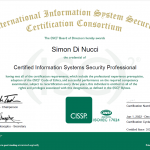 FacebookTweetPin CISSP 2021: What’s New and How to Prepare? Let’s look at the significant changes made to the CISSP Official Exam Outline (the course syllabus). What You Can Learn Who is this Course for? Students wishing to become Certified Information Systems Security Professionals. Are there any Prerequisites? I designed this course to help students prepare… Read more: CISSP 2021: What’s New and How to Prepare
 - Master the Complete System Safety Assessment Process
 FacebookTweetPin Master the Complete System Safety Assessment Process. Learn how to design, tailor, and execute a comprehensive system safety assessment programme — from Preliminary Hazard Identification through to Environmental Hazard Analysis. Mil-Std-882E Tasks 201–210 · 69 lessons · 10.5 hours of video · Self-paced online training Learn the process. Master the analyses. Build a defensible… Read more: Master the Complete System Safety Assessment Process
 - The Safety Artisan’s Resume
 FacebookTweetPin The Safety Artisan’s Resume, or Curriculum Vitae (CV), if you prefer, is quite long. Why should you listen to me? If you want to know how I know what I know, read on… Simon Di Nucci – Principal Safety Consultant BEng, MSc, CPEng, FIE(Aust), NER, Cert CMi, CISSP Key Skills Qualifications MSc in Safety… Read more: The Safety Artisan’s Resume
 - Supporting a Vision Worth Sharing
 FacebookTweetPin At The Safety Artisan, we recently received a Certificate of Appreciation from The Fred Hollows Foundation in recognition of our support. We are genuinely honoured to receive this acknowledgement. More importantly, we are proud to support an organisation whose work has transformed millions of lives around the world. Our Business is Improving Safety Our… Read more: Supporting a Vision Worth Sharing
 - ISSS Credentialing Initiative: System Safety Professionals
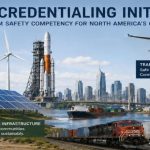 FacebookTweetPin The ISSS Credentialing Initiative: System Safety Professionals. Where is the Next Generation of System Safety Professionals? We need a Workforce Development Program for Safety-Critical Industries. The International System Safety Society (ISSS) is launching a major credentialing initiative designed to strengthen and expand system safety capability across Canada and the United States. Developed as a… Read more: ISSS Credentialing Initiative: System Safety Professionals
 - Sub-System Hazard Analysis with Mil-Std-882EFacebookTweetPin In this video lesson, I look at Sub-System Hazard Analysis with Mil-Std-882E (SSHA, which is Task 204). I teach the mechanics of the task, but not just that. I’m using my long experience with this Standard to teach a pragmatic approach to getting the work done. Task 204 is one of three tasks that… Read more: Sub-System Hazard Analysis with Mil-Std-882E
Meet the Author

Learn safety engineering with me, an industry professional with 25 years of experience. I have:
•Worked on aircraft, ships, submarines, ATMS, trains, and software;
•Tiny programs to some of the biggest (Eurofighter, Future Submarine);
•In the UK and Australia, on US and European programs;
•Taught safety to hundreds of people in the classroom, and thousands online;
•Presented on safety topics at several international conferences.
Hi, everyone, and welcome to The Safety Artisan. I’m Simon, and I just wanted to share with you briefly why I started this enterprise. I’ve had a career in safety, engineering, and safety consulting for over 25 years now. And in that time, I’ve seen customers make one of two mistakes quite often. First of all, I’ve seen customers not do some things that they should have been doing. This was usually because they were just ignorant of what their legal obligations were.
And I guess that’s a fairly obvious mistake. That’s what you would expect me to say. But more often, I’ve seen customers do too much to try and achieve safety, which is surprising! I’ve seen people waste a lot of time, energy, and money doing things that just didn’t make a difference. Sometimes it actually got in the way of doing good safety work.
And I think the reasons for those mistakes are, first of all, ignorance.
Secondly, not knowing precisely what safety is and therefore not being able to work out how to get there. That’s why I started The Safety Artisan. I wanted to equip people with the knowledge of what safety really is and the tools to get there efficiently. To neither do too much nor too little. We want Safety, Just Right.
Leave a Reply